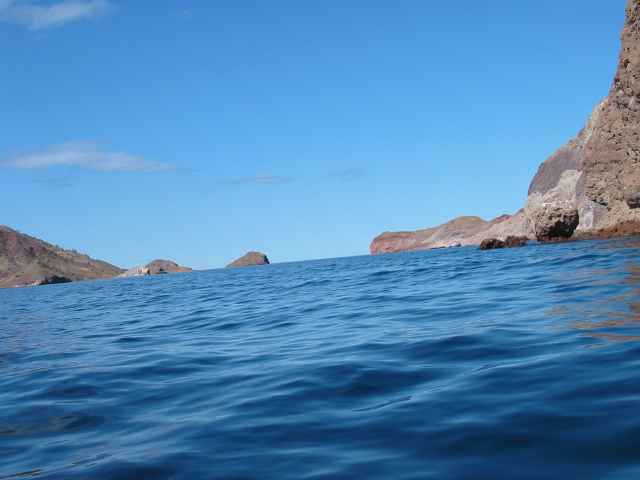
We had to travel northwest for a while and go around three points before we could see Isla Mejia. This is a small island off the north end of the big island and we knew we could turn right before having to go around that. As we traveled north we felt a little help from the flood tide and passed through several rough patches of rip current with three foot standing waves. On one of these I turned close to shore to try to find calmer water but the current pulled me sidewise. I could see the bottom rushing by under me and then dropping off into the depths right where the worst standing waves started. We used our GPS units as speedometers to check our progress from time to time. I was pleased to see mine read over five miles an hour, better than my best time in calm water. But as we passed one point and I slipped over an eddy line I looked down and read zero on the speedometer! We had run into current flowing back around the top of the island. I turned close to shore inside of some standing waves in shallow water and found an eddy current past the point. My speed went back up over 3 miles an hour and I pulled ahead of Patrick who is normally a faster paddler than I. He is often stopping to let me catch up.
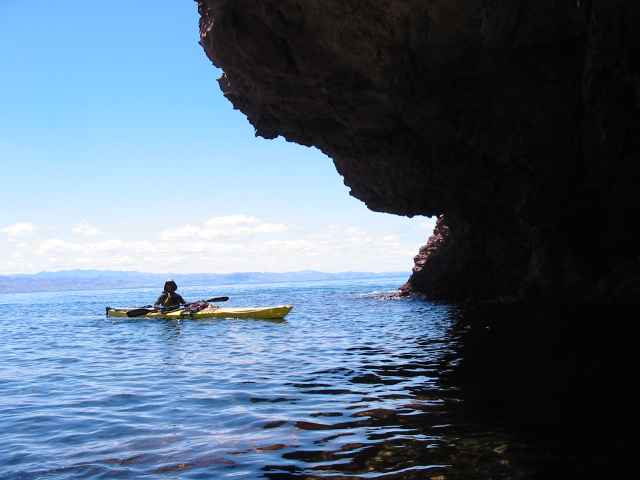
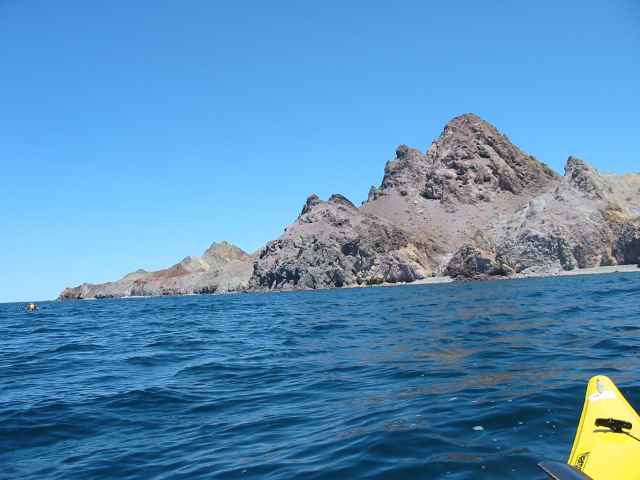
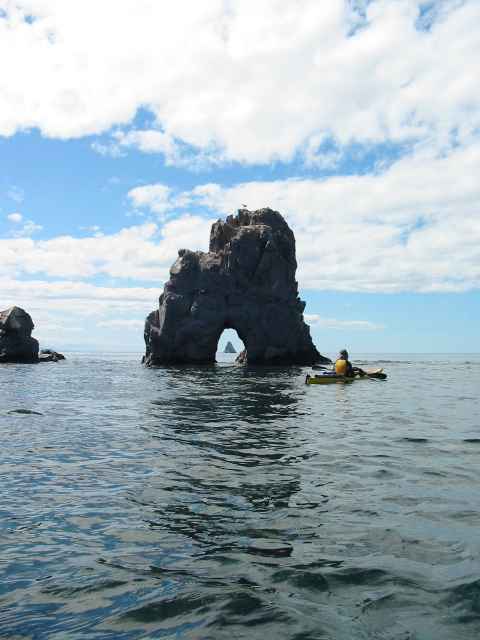
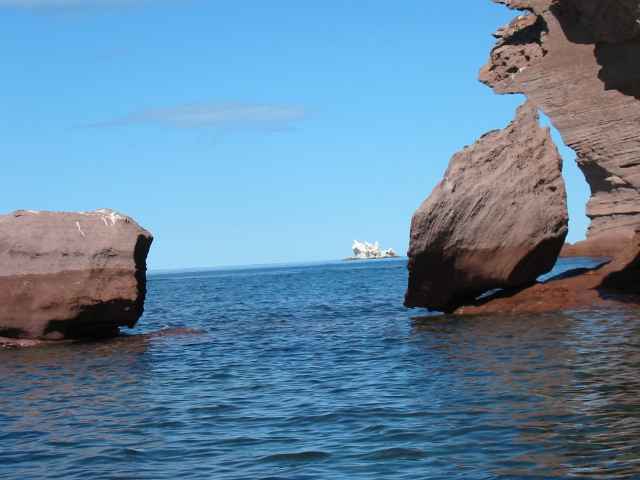
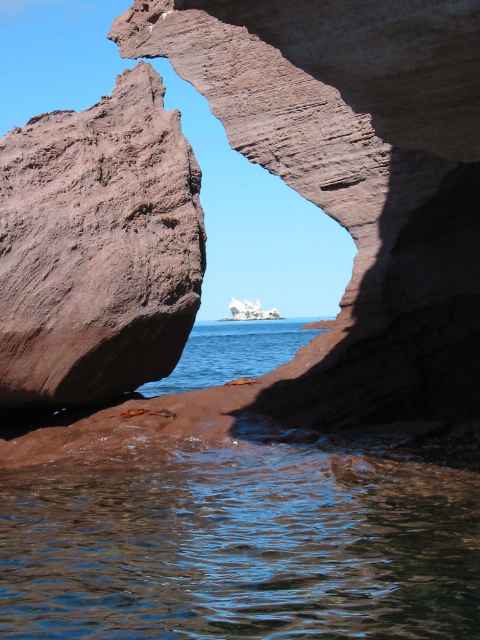
We stopped to photograph our first cave on the island. Before this point the shore had been gravely, from here on it was rocky and varied, with small caves and coves to poke into. There is a white spire of rock offshore, Roca Vela, and many rocks close to shore. One of these had an arch in it. Just large enough to fit my kayak through. Next we rounded the end of the west shore and turned into the channel between the main island and Isla Mejia. A current slowed us down but swell rose up a little and helped us forward. A peninsula that was supposed to add 2 kilometers to our day helped us with a shortcut across a spit that was under water at high tide.
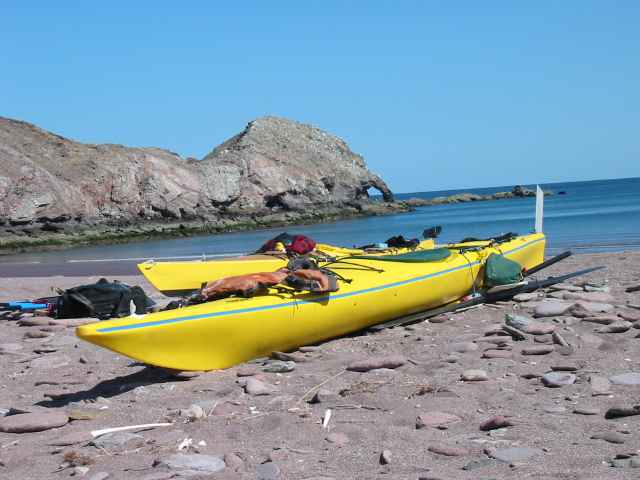
Beautiful views of Roca del Angel appeared between near-shore rocks. We paddled into Bahia el Refugio and spied half a dozen beautiful beaches to land on. Unfortunately the first three we landed on had salt marshes behind them with standing water which might breed millions of bugs. We kept looking until we found a large beach backed only by desert. It was a bit exposed to the wind but that blew the bugs away. The sand behind the beach was covered with trash, indicating that this was a popular fish camp. If the local fishermen preferred to camp here, the spot must have some redeeming values.